








US Strategic Bitcoin Reserve Bill Would Block BTC Sales for 20 Years

The House Financial Services Committee formally reported the amended American Reserve Modernization Act (H.R. 8957) on November 24; it now awaits possible consideration by the full House.
The bill would bar the government from selling, exchanging, auctioning or pledging reserve Bitcoin for at least 20 years after enactment, going further than the March 2025 executive order.
The amended text counts the 20 years from enactment rather than each deposit, and replaces quarterly proof-of-reserves reports with annual public reporting.
It does not set a purchase schedule or target and rules out new taxes, borrowing or deficit spending to buy Bitcoin.
The commitment remains a proposal: a House floor vote has not been scheduled.
The US Strategic Bitcoin Reserve is a step closer to being protected by federal law after the House Financial Services Committee formally reported an amended bill on November 24 that would prevent Bitcoin held in the reserve from being sold for at least 20 years.
The American Reserve Modernization Act of 2026, also known as H.R. 8957, has been placed on the House Union Calendar, making it eligible for consideration by the full chamber.
First introduced in May, the legislation was sponsored by Republican Congressman Nick Begich of Alaska alongside Democratic Congressman Jared Golden of Maine.
While the proposed restrictions could reduce uncertainty surrounding future government Bitcoin sales, the amended legislation offers less in the way of new purchases and financial transparency than some Bitcoin supporters might expect.
US Government Could Be Locked Into Holding Bitcoin for Two Decades
Under Section 5 of the amended legislation, Bitcoin deposited in the reserve would have to be retained for a minimum of 20 years following the law’s enactment.
The restrictions extend beyond selling. The government would also be prohibited from exchanging, auctioning or pledging the reserve’s Bitcoin as collateral during that period.
The proposal goes further than President Donald Trump’s March 2025 executive order, which already established a policy against selling Bitcoin held in the reserve.
The distinction is legal rather than financial. An executive order can be reversed by another administration, whereas changing a statutory holding requirement would generally require further congressional action.
Even after the two decades have passed, Treasury would not necessarily be free to liquidate the entire reserve. The bill provides for recommendations to release up to 10% of reserve assets over any two-year period.
It also requires Treasury to examine circumstances that might justify earlier sales, including national security and financial stability concerns. Any proposed legislative exceptions would need to be considered by Congress.
Congress Has Quietly Changed Two Important Provisions
A comparison between the original May legislation and the amended November text reveals that lawmakers have revised some of the protections surrounding the reserve.
The original bill explicitly required newly deposited Bitcoin to be held for 20 years from its individual deposit date. That additional requirement is absent from the amended version, which instead measures the minimum holding period from the date the legislation becomes law.
The transparency requirements have changed, too.
More coverage of this story
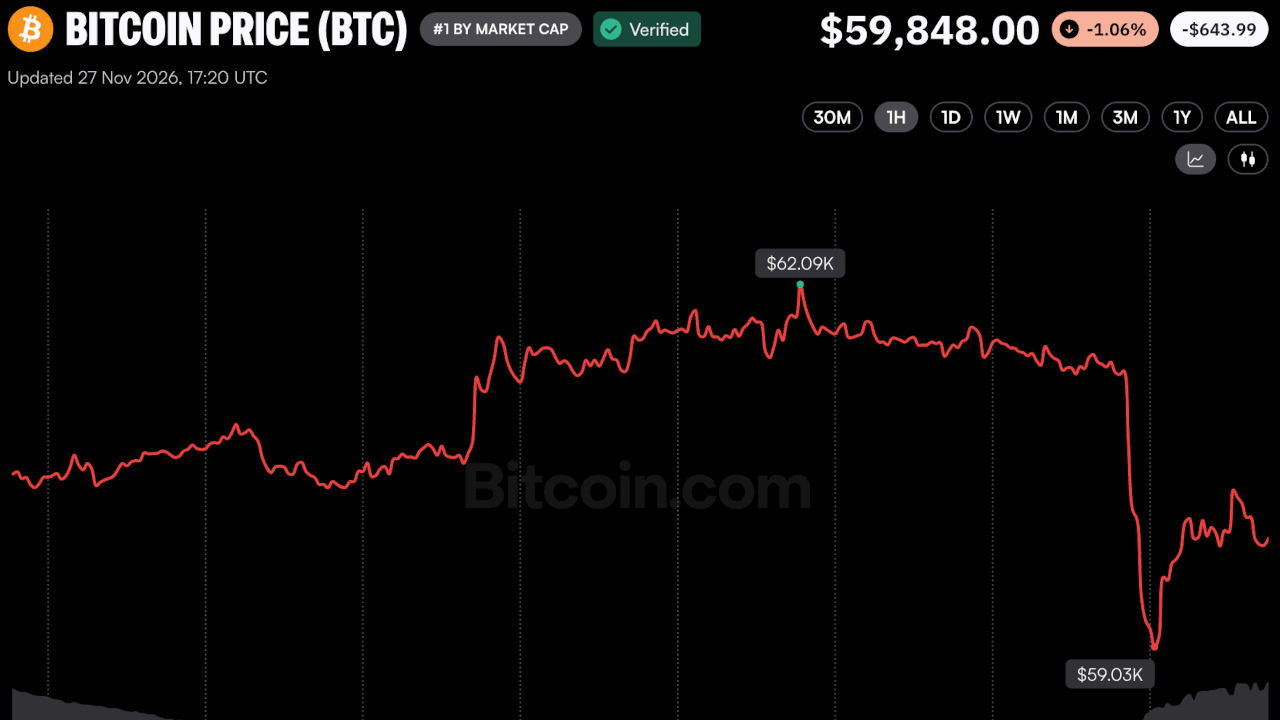
BTC fell below $60K as $7B in options expired and November ETF outflows topped $5 billion, with experts warning of lingering downside risks.

Bitcoin watch Friday's $7B options expiry, Switzerland's first spot Bitcoin ETF, and news on the US Strategic Bitcoin Reserve.